
























A compact CSS rule can hide important details: property names, values, selector scope, and the order in which declarations appear. This guide reviews one .card rule with css-beautifier and css-minifier, so you can compare readable source with a delivery-ready string without losing the original.
Start with one complete CSS specimen
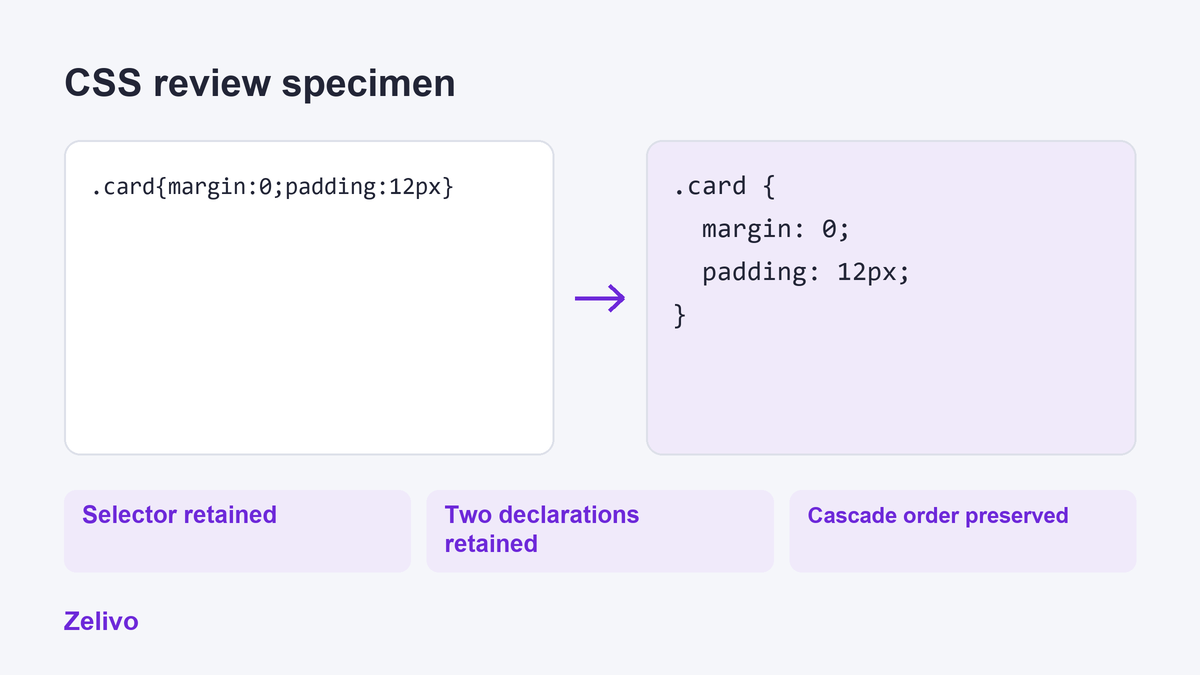
Use the small rule shown below as the specimen. It contains the .card selector, braces, and two declarations: margin: 0 and padding: 12px. Keeping the selector and both values intact makes the comparison reproducible and gives you a clear baseline for later visual or computed-style checks.
Format the compact rule first, then make a separate copy for minification. Formatting makes the declarations easier to compare. Minification reduces layout whitespace in a delivery copy. Keep the original nearby so you can see whether anything beyond whitespace or optional punctuation changed.
.card{margin:0;padding:12px}Format the rule before comparing it
Paste .card{margin:0;padding:12px} into the beautifier with the selector, braces, and both declarations intact. Format the rule, then read from .card through the closing brace. The expected arrangement places margin and padding on separate lines under the same selector.
Copy the readable rule into the minifier as .card { margin: 0; padding: 12px; }. Minify that copy and inspect the compact result. Match both property names and values against the original before using the shorter string in a delivery file.
.card {
	margin: 0;
	padding: 12px;
}
Interpret the result and verify behavior
The beautified output should retain .card, margin: 0, and padding: 12px, while placing each declaration on its own line. The minified output should retain those same tokens with less whitespace. A shorter string is useful only when its declarations and values still match.
Verification has two parts. Compare the formatted and minified text with the source, then compare the rendered page or computed styles with the original stylesheet. Check the card’s margin and padding, and confirm that nearby rules still win or lose according to the existing cascade.
Know the safe boundary for reuse
Keep a readable source copy and treat the minified string as a delivery artifact. Before replacing the original file, compare the page rendered with the formatted or minified copy. This matters especially when the real stylesheet contains custom properties, newer syntax, or rules that depend on order.
This specimen cannot prove that every stylesheet is safe to minify. It has no variables, nested syntax, fallbacks, or competing selectors. Reuse the method on one controlled copy, preserve declaration order, and test the affected page before publishing a broader transformation.
- Confirm
.cardand both original property values remain. - Compare margin and padding in computed styles.
- Preserve stylesheet order before replacing production CSS.
